
Before Approving the Replacement, Can You Find the Warranty?
A failed water heater puts warranty records to the test. Before approving the estimate, property managers need to know what is covered and what the property will still pay.


OperationsAnalysis
Before taking on an individually owned condo, establish who handles association requirements, building repairs and tenant updates.
So what: Define association coordination in the management agreement, confirm move-in procedures and assign responsibility for repair follow-up and tenant updates.
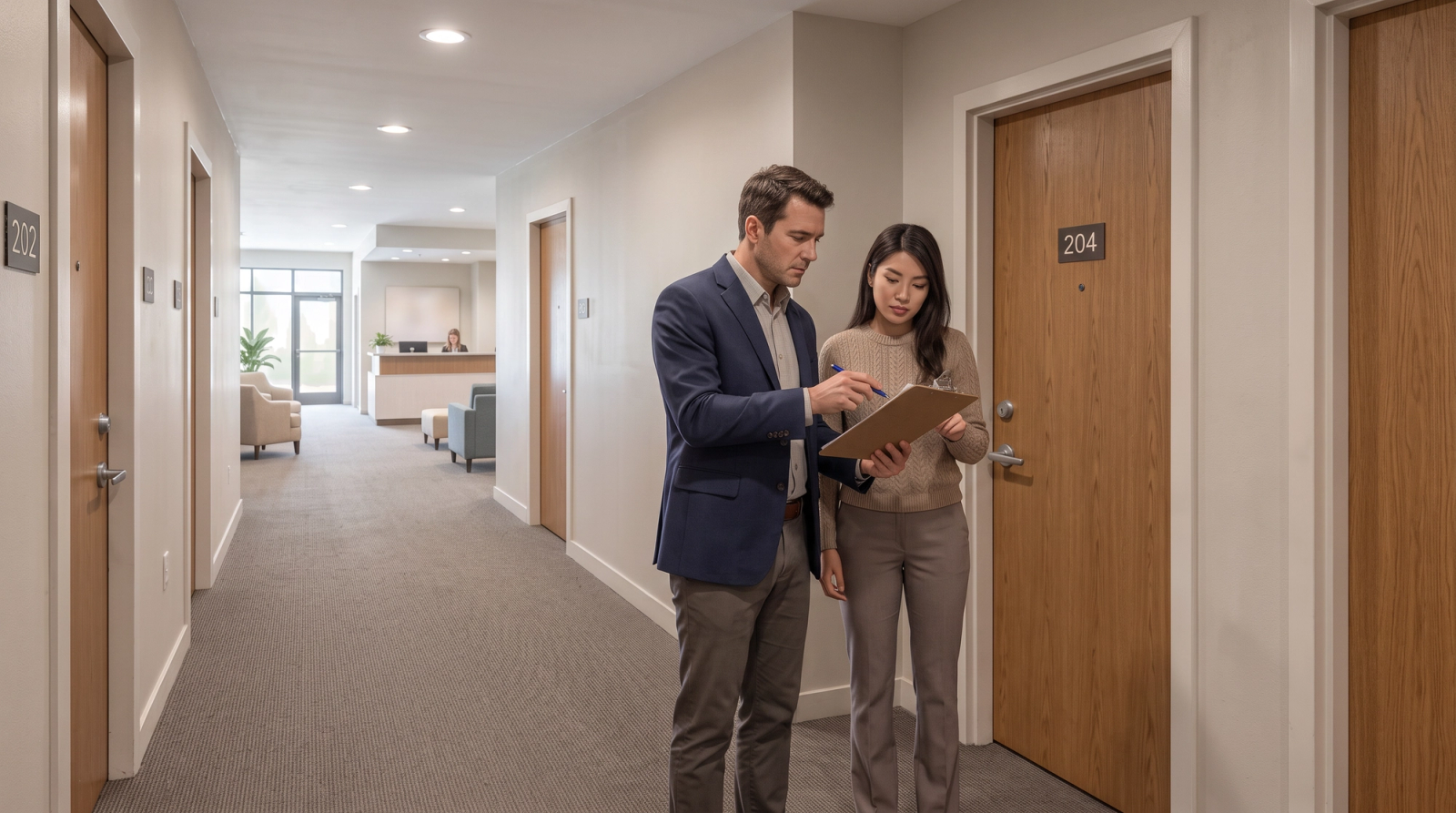
A tenant reports water coming through the ceiling of a rented condominium. The rental manager receives the request, but investigating the source may require access to another unit or work arranged through association management.
In this hypothetical, responsibility for the tenancy and authority over the building sit with different people.
CAI-published guidance on management roles distinguishes rental property management from association management. The rental manager serves the unit owner; the association manager implements board policies and oversees assigned community operations. Managing the rental means knowing when to involve the association and who will follow up.
Review the condominium’s declaration, bylaws, current rules and relevant amendments alongside the owner’s management agreement. Check maintenance responsibilities under the applicable law and governing documents. Avoid assuming that the owner handles everything inside the unit and the association handles everything outside it.
Create a short operating reference with association contacts, after-hours reporting instructions and the document provisions staff will need when arranging work. Resolve unclear responsibilities during onboarding, before an urgent repair forces a decision.
The owner’s management agreement should specify who handles assessment payments, association correspondence, meeting attendance and follow-up on building repairs. It should also define spending authority and escalation procedures. Staff need to know when they can authorize work, when owner approval is required and when association management must become involved.
Before advertising the unit, check whether the proposed lease term is permitted and whether the association requires registration, documents or another review. Confirm applicable move-in arrangements and charges before promising an applicant a date.
Keep the association’s procedures separate from the owner’s screening and leasing process. Staff should know which steps are complete and which remain outstanding.
CAI recommends that owners explain association rules to renters and provide the association with renter names and contact information. These are the organization’s recommendations, not uniform legal requirements.
Give the tenant the applicable rules and record which version was delivered. Explain access, parking and moving procedures, and provide a concise contact sheet for rent questions, maintenance, building access and emergencies.
In the ceiling-leak example, the report identifies a condition requiring attention. It does not establish the source or who ultimately pays.
Follow the property’s emergency procedures, contact the appropriate parties and coordinate access. Keep observations separate from conclusions: “water visible on bedroom ceiling” describes a condition; “association pipe failed” assigns a cause that may not yet be established.
When association action is needed, record the request, who received it and when follow-up is due. Assign someone on the rental management team to update the tenant. Explain what has happened and what remains pending without promising a contractor visit or repair date that another party has not confirmed.
That follow-up takes staff time and belongs in the service agreement. CAI describes the association manager’s role as implementing board policies and overseeing work assigned under the association’s contract. The rental manager’s agreement should separately define the coordination work the owner expects.
Before accepting the assignment, compare the expected coordination work with the proposed fee and staffing commitment. If repeated access arrangements, meetings or extended repair follow-up fall outside the standard service, specify how the owner will approve and pay for that work.
A failed water heater puts warranty records to the test. Before approving the estimate, property managers need to know what is covered and what the property will still pay.
ResiHome will manage Southern Waters Capital’s new Florida rental community, with a public grand opening scheduled for November 16.
Treplus, Greystar, United Plus and Sparrow Living show how leasing, staff training and resident participation shape active-adult property operations.
![keeping the realistic image and the PropertyOps Post identifier unchanged. Let's apply that semibold font to the full layout generated-image.png I meant the semibold serif treatment generated-image.png Now publish the final draft of the brief to Sanity. I will upload the image Create the final ResiHome brief as a Sanity draft in PropertyOps production, without an image for you to upload? text {"projectId":"cypelnwv","dataset":"production","documents":[{"type":"article","content":{"title":"ResiHome to manage SoLiv Panama City townhomes","slug":{"_type":"slug","current":"resihome-to-manage-soliv-panama-city-townhomes"},"dek":"ResiHome will manage Southern Waters Capital’s new Florida rental community, with a public grand opening scheduled for November 16.","soWhat":"Track ResiHome’s new management assignment as SoLiv Panama City begins leasing ahead of its scheduled November 16 opening.","contentType":"news","beat":{"_type":"reference","_ref":"beat-operations-amenities"},"sectors":[{"_key":"sfr","_type":"reference","_ref":"sector-sfr-btr"}],"authors":[{"_key":"news","_type":"reference","_ref":"d4765a47-dc48-4f4d-8a6a-4ac50f55226f"}],"publishedAt":"2026-11-06T22:45:00Z","body":[{"_key":"p1","_type":"block","style":"normal","markDefs":[{"_key":"source","_type":"link","href":"https://www.prnewswire.com/news-releases/resihome-partners-with-southern-waters-capital-to-manage-new-build-to-rent-community-in-panama-city-fl-302925297.html"}],"children":[{"_key":"s1","_type":"span","marks":[],"text":"ResiHome has been selected to manage SoLiv Panama City, a new build-to-rent townhome community developed by Southern Waters Capital in Panama City, Florida, according to the company’s "},{"_key":"s2","_type":"span","marks":["source"],"text":"November 2 announcement on PR Newswire"},{"_key":"s3","_type":"span","marks":[],"text":"."}]},{"_key":"p2","_type":"block","style":"normal","markDefs":[],"children":[{"_key":"s4","_type":"span","marks":[],"text":"The community at 2316 Fortune Ave. is leasing three-bedroom townhomes with two-and-a-half bathrooms. ResiHome will provide property management services, including leasing technology, maintenance and reporting."}]},{"_key":"p3","_type":"block","style":"normal","markDefs":[],"children":[{"_key":"s5","_type":"span","marks":[],"text":"A public grand opening is scheduled for November 16. Executives from both companies said they expect to work together on additional communities, though the announcement did not identify other properties."}]}],"noteToEditors":"Final brief. User will upload the header image. Leave as draft until image is added; publication requires a separate publish action."}}]} Reply yes to proceed or no to cancel. yes Saved in Sanity as a draft titled “RClipboard and pen on a desk overlooking residential buildings, with the heading “Management contracts” and PropertyOps Post branding.](https://cdn.sanity.io/images/cypelnwv/production/5db82f438cdf0b41f0a420d33f3f800436ae6ee9-1672x940.png?w=1100&auto=format)