
Rental Fraud Starts Before Move-In: A Verification Playbook for Leasing Teams
Fraud prevention cannot sit entirely with screening software. Leasing teams need consistent verification and escalation procedures before keys change hands.


RiskAnalysis
Better insurance terms increasingly go to apartment owners that can document building condition, loss prevention, and completed risk-reduction work.
So what: A clear risk record gives brokers and underwriters more than a claims history. It shows what the operator has fixed, maintained, and improved.
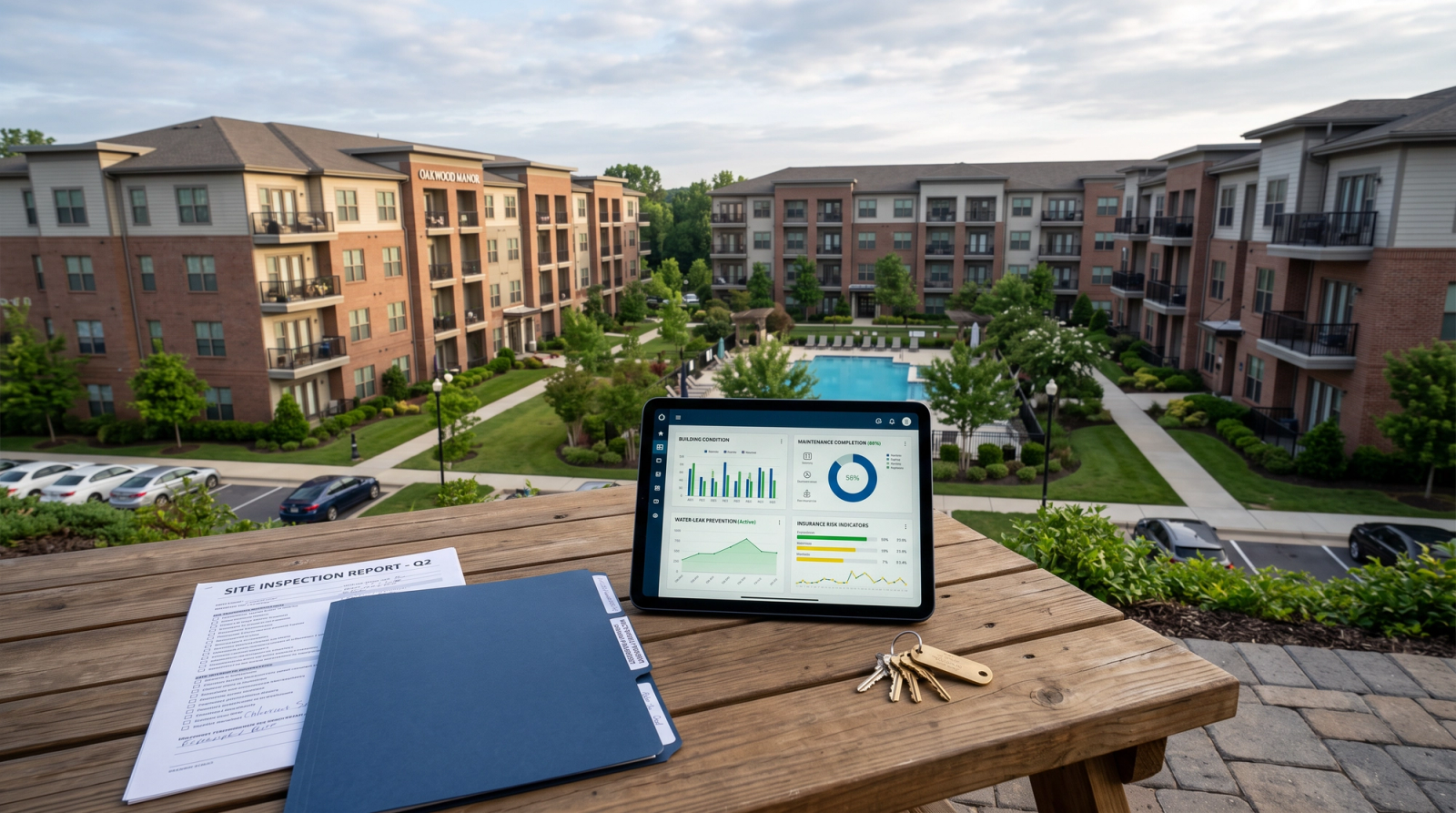
Property insurance has become more competitive for many multifamily owners in 2026. Carriers are competing for well-managed accounts, and some quality portfolios are seeing lower rates, improved deductibles, and more capacity than they could access during the hard market. That relief is not universal. Property condition, location, catastrophe exposure, roof age, maintenance history, and loss experience still shape how an insurer views an account.
The Baldwin Group’s 2026 multifamily market report says well-managed portfolios are seeing meaningful property-market competition, while insurers continue to scrutinize documented maintenance, aging systems, and operational controls.
For property operators, that makes the insurance submission more important than it has been in years. A clean loss run is helpful. It is not enough by itself. Underwriters also want to understand the current condition of the buildings, the exposures the owner has identified, and the work completed to reduce the chance or severity of another loss.
A strong submission gives them that context before they are forced to make assumptions.
Many renewal submissions are still built in the final weeks before a policy expires. The broker requests schedules of values, loss runs, roof information, supplemental applications, inspection records, and capital-project details. Site teams, maintenance leaders, accounting staff, and asset managers pull documents from separate systems and try to assemble a complete response under a deadline.
That process often produces a file full of documents but short on explanation.
A loss history may show several water claims, for example, without explaining whether the source was aging supply lines, a failed appliance hose, a roof issue, or a vendor error. It may not show that the owner replaced plumbing in affected buildings, added leak sensors, changed the emergency-response process, or completed deferred roof work.
Without that information, an underwriter may price the account around the claims history and uncertainty rather than the improvements made after those claims.
The Urban Land Institute found that more complete, verified building information can help insurers price risk more accurately. The organization notes that owners who provide specific information on construction, occupancy, protection, exposure, roof materials, and other property characteristics may improve pricing or coverage outcomes.
The goal is not to make the property appear risk-free. Every building has risk. The goal is to show that the operator understands the exposures, maintains the asset, and acts when a problem is identified.
There is no single software category called a “risk-profile platform” that every operator needs to buy. This work may be managed through a broker’s risk-control team, an internal renewal process, a risk-management system, property-management software, capital-planning records, or connected-building tools.
What matters is maintaining accurate information throughout the year so the insurance submission does not have to be rebuilt from scratch at renewal.
A useful risk record should include:
This is not busywork. In multifamily, insurers are paying close attention to water losses, deferred maintenance, crime exposure, aging plumbing and electrical systems, roofs, and the quality of incident documentation.
Marsh McLennan Agency’s 2026 real estate outlook identifies water damage, deferred maintenance, aging systems, security practices, and updated property valuations as central underwriting concerns for multifamily owners.
Loss history is one of the most important sections of any insurance submission, and it is often the least well explained.
A claims report tells an underwriter what was paid. It does not necessarily explain whether the same condition remains at the property. That is where the operator’s documentation can make a difference.
If an apartment community had multiple water claims, the submission should not stop at a claim total. It should explain:
For example, “water claims were addressed” is weak. A useful explanation is more specific: three supply-line failures occurred in two 1980s buildings; the owner replaced the affected lines, installed leak sensors in mechanical areas and vacant units, updated the emergency-response protocol, and documented quarterly inspections after the work was complete.
That gives the broker something meaningful to present to underwriters. It also gives the underwriter a reason to evaluate the account based on its current condition rather than only its historical claims.
Smart-building technology can strengthen the record, especially when a portfolio has a recurring water-loss, access-control, fire-safety, or maintenance concern.
Leak sensors, automatic shutoff systems, centralized work-order platforms, access-control tools, and building-system monitoring do not guarantee lower premiums. Carriers will evaluate each account on its own facts. But these systems can produce evidence that is otherwise difficult to assemble: alert histories, response times, completed work orders, maintenance intervals, inspection logs, and records of corrective action.
The real value is documentation.
If a broker or insurer asks what changed after a water-loss event, the operator can provide installation records, alert logs, maintenance tickets, and a written response procedure. If a lender requests evidence of property controls during a refinance, the same records can help support the diligence file.
The ULI’s insurance-underwriting work points to the value of standardized property data across owners, lenders, brokers, and insurers. Its guidance identifies more than 50 data points that may be considered in property-insurance underwriting, particularly those tied to climate and environmental hazards. Read the ULI overview of property data and insurance underwriting.
Technology should support the underwriting story, not replace it. The most useful records still connect the operational event to the outcome: what happened, what the property team did, and what changed afterward.
Operators do not need a new platform simply because the term “risk data” is popular. Before adding software or engaging a service, ask whether it will improve the actual submission and make the portfolio easier for an underwriter to evaluate.
Ask these questions:
The answer may be a broker-led risk-control service, a well-managed internal renewal file, a property-data tool, or a combination of all three. The best approach is the one that turns operational records into a clear explanation of the portfolio’s current risk.
The strongest risk record is maintained throughout the year. Update it after a major claim, inspection, capital project, system replacement, security improvement, or recurring maintenance issue.
That can be as simple as assigning ownership for the file and saving the documents the property already produces: inspection reports, invoices, vendor recommendations, photos, work orders, project summaries, and claim reviews.
The current market gives many multifamily owners a better opportunity to negotiate property coverage. It also gives underwriters more accounts to choose from. Owners that can clearly document maintenance, improvements, and risk controls will be better positioned to stand out from accounts that arrive with incomplete records and unexplained losses.
The Baldwin Group’s report notes that favorable property-market outcomes increasingly depend on disciplined risk management, thorough documentation, and long-term capital planning.
Fraud prevention cannot sit entirely with screening software. Leasing teams need consistent verification and escalation procedures before keys change hands.