Preparing a Better Property Insurance Submission With Risk Data
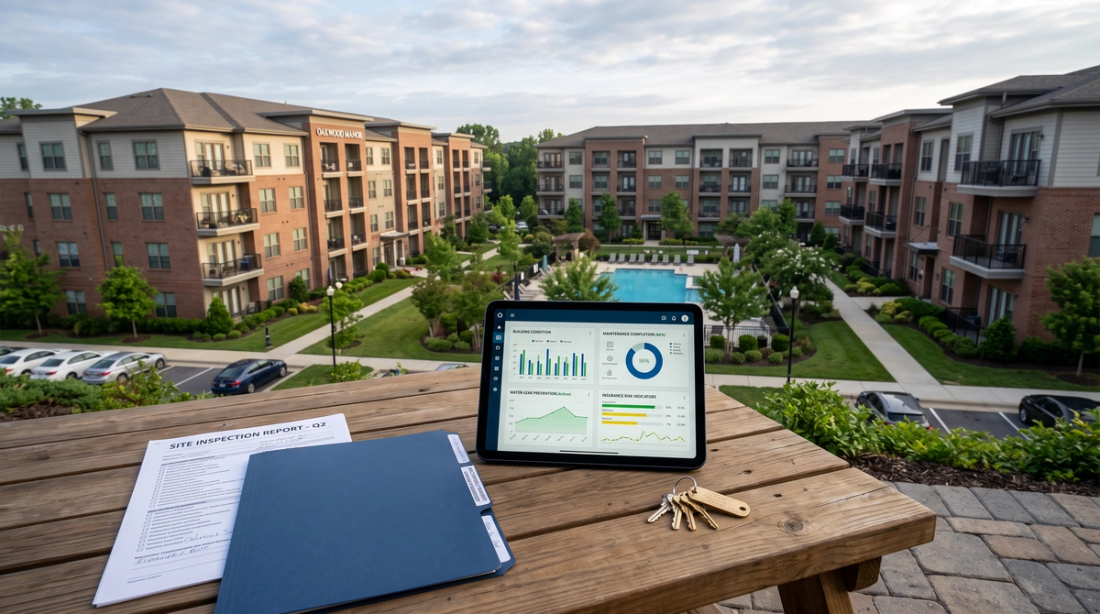
Better insurance terms increasingly go to apartment owners that can document building condition, loss prevention, and completed risk-reduction work.


RiskSector Playbook
Fraud prevention cannot sit entirely with screening software. Leasing teams need consistent verification and escalation procedures before keys change hands.
So what: Apply neutral verification triggers, route discrepancies through a documented escalation path, and confirm every required control before releasing keys or access credentials.

Fraud prevention cannot sit entirely with screening software. Leasing teams need consistent verification and escalation procedures before keys change hands.
Rental fraud is often discussed as a screening problem, an eviction problem or a bad-debt problem. In practice, it often begins much earlier.
The most consequential decision may occur when a leasing team receives an application, reviews income documents, resolves an inconsistency or decides whether to move a prospect quickly toward approval. By the time a fraudulent application becomes a collections or eviction matter, the property may already have absorbed months of lost revenue, legal costs, staff time and turnover expense.
A National Multifamily Housing Council survey of 75 leading apartment owners, developers and managers found that 93.3% experienced fraud in the prior 12 months. Among respondents that experienced fraud, 84.3% reported falsified or fabricated income documentation, 80% reported application misrepresentation and 70% reported identity theft, fraudulent identification or use of another individual’s personal information.
That makes application fraud a frontline leasing-process issue, not just a back-office compliance concern.
Leasing teams face competing expectations.
They are expected to respond quickly, make the application experience simple, protect conversion, preserve occupancy and avoid losing qualified prospects to a competing community. At the same time, document-editing tools and identity misuse can make questionable information appear credible at first glance.
That pressure can create inconsistency.
One associate may request additional verification. Another may accept similar materials because a prospect is prepared to move in immediately. A third may escalate a file based on a subjective impression rather than a written standard.
None of those outcomes creates a reliable fraud-control process.
The answer is not asking leasing associates to become investigators. It is giving them an objective, documented path for pausing, verifying and escalating an application when it meets a defined review condition.
The most important control is to evaluate the file, not the applicant.
A leasing associate should not decide that someone “looks suspicious” or apply additional scrutiny because of a name, accent, appearance, communication style, neighborhood, social-media presence or other subjective factor.
Instead, an operator should establish neutral, written conditions that trigger the same next step for every similarly situated applicant.
Those triggers may include:
A discrepancy is not proof of fraud. It is a reason to apply a standard verification step.
The Fair Housing Act prohibits housing discrimination based on race, color, national origin, religion, sex, familial status and disability. Consistent, documented verification criteria help property teams apply procedures fairly and reduce the risk that ad hoc judgment drives a decision.
A workable process does not need to turn every application into a lengthy investigation. It should establish the core points where the property confirms that information is complete, consistent and verified through its approved process.
Confirm that the applicant completed the operator’s approved identity-verification process.
Escalate the file when identity cannot be validated through the approved method or when required information cannot be reconciled through the standard workflow.
Confirm that reported income meets the property’s written threshold using accepted documentation or verification methods.
Escalate when submitted materials conflict, when income cannot be independently verified through the approved process or when required documentation is incomplete.
Confirm employment, self-employment or another stated income source through the operator’s approved workflow.
Escalate when the source cannot be substantiated, the information conflicts across records or the required verification is not completed.
Confirm that material facts align across the application and supporting records, including names, addresses, household members and stated income.
Escalate when the records contain material conflicts that the applicant cannot resolve through the standard process.
Review screening results under written rental criteria.
Escalate when the result requires manual review, additional documentation or a formal decision process. Leasing teams should not improvise an approval or denial outside the operator’s established criteria.
A clear escalation ladder keeps frontline staff from having to invent a fraud response while a prospect is waiting in the leasing office.
The leasing team requests missing or incomplete information using a standard checklist.
The goal is to give applicants a clear opportunity to complete the same requirements that apply to others in a comparable situation.
The file is routed to a designated verifier, manager, centralized team or approved technology workflow for additional review.
The leasing associate should know exactly what to do, who receives the file and how to explain the next step to the applicant.
A trained decision-maker applies the written rental criteria, documents the conclusion and manages any required notices or next actions.
The process should define who can approve an exception, what documentation is required and when legal or compliance review is necessary.
Language matters.
A leasing team should communicate the process and the next step. It should not make informal conclusions about an applicant’s honesty or accuse someone of fraud before a formal review is complete.
Use language such as:
Our standard application process requires us to verify the information provided before we can complete a decision. We will contact you if additional documentation or information is needed.
Avoid statements such as:
Clear, consistent communication protects the applicant experience and helps staff follow the same process every time.
The move-in process is the last opportunity to confirm that an approved application has completed every required step before the property grants access.
Before keys, access credentials, parking permits or move-in approval are released, the property should confirm:
That final review is not unnecessary friction. It is an operational control point.
In a 2026 letter to Congress, the National Apartment Association, NMHC and the Real Estate Technology and Transformation Center said rental applications can include falsified personal information and documentation that cannot easily be verified by visual review alone. The organizations also cited delinquencies, lost rental revenue, legal costs and the cost to repair and remarket apartments as consequences of fraudulent applications.
Counting detected fraud cases is not enough.
Operators should also ask whether their approval process is working consistently before fraud reaches the move-in or collections stage.
A 30-day process audit can include:
The goal is not to create a more burdensome application process. It is to find the points where a file can move forward without complete verification or where staff are forced to make subjective decisions without clear guidance.
Fraud controls work best when they are consistent, documented and designed into the leasing process before a decision is rushed.
Screening technology matters. But it cannot replace clear ownership, repeatable verification steps and a final move-in control point.
The goal is not to turn leasing teams into investigators. It is to give them a reliable process for pausing, verifying and escalating when the file requires it.
Better insurance terms increasingly go to apartment owners that can document building condition, loss prevention, and completed risk-reduction work.