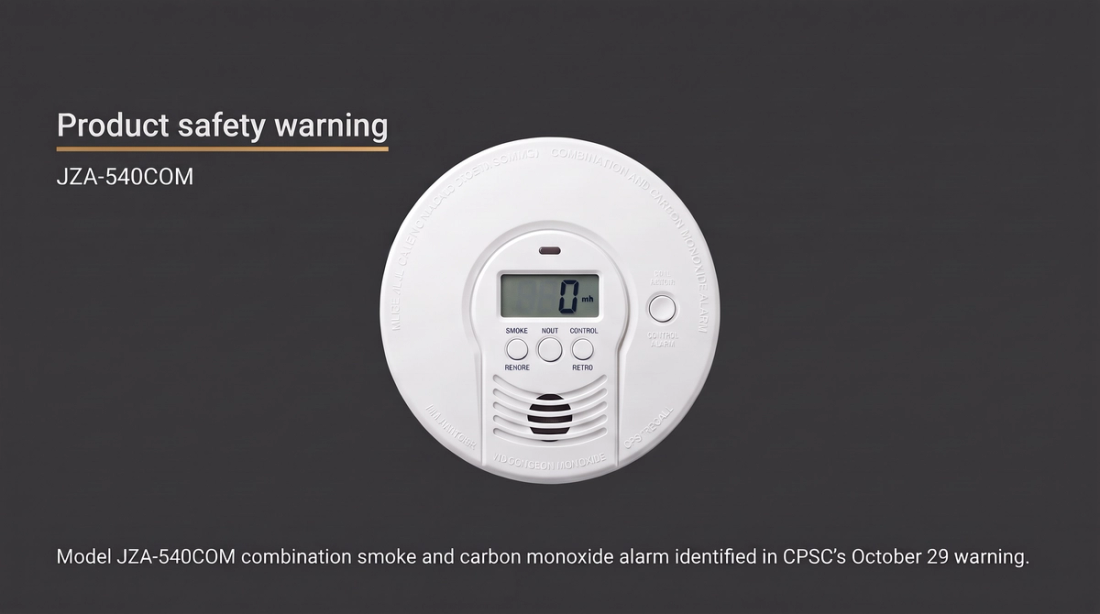
CPSC warns property teams to check for JZA-540COM smoke and carbon monoxide alarms
The agency says the combination alarms can fail to sound in hazardous smoke and fire. Its October 29 warning covers approximately 51,825 units sold online.


RiskAnalysis
A familiar vendor, a valid invoice and a new bank account can add up to payment fraud. The control that matters is how the change gets verified.
So what: Separate invoice approval from bank-change approval. Require independent verification and a documented sign-off before new payment details enter a payment run.

Consider a routine request arriving before the next payment run. A landscaping contractor says it has changed banks and asks accounts payable to update its payment details. The invoice matches work completed at the property. The amount looks right. A manager approves it.
None of that establishes whether the new account belongs to the contractor.
That is the opening in vendor bank-change fraud. An operator can approve a legitimate expense and still send the payment to a criminal. The invoice and the payment destination are separate questions. The approval process needs to address both.
The FBI’s Internet Crime Complaint Center describes business email compromise, or BEC, as a scam targeting legitimate transfers of funds. Criminals may compromise an actual email account or impersonate a trusted business contact to redirect a payment. The scheme can affect both wire transfers and automated clearing house payments, commonly called ACH.
The attacker does not necessarily need to invent a contractor or persuade someone to approve unnecessary work. The objective can be narrower: change where an expected payment goes.
The FBI has documented schemes in which criminals gather information from compromised business email accounts, then impersonate communications between companies and their vendors. A message that fits an existing relationship is therefore not proof that its instructions are legitimate.
For property operators, the distinction is straightforward. A site manager may confirm that the landscaper completed the work. Accounts payable may match the invoice to the contract. Neither check, by itself, authenticates replacement bank details.
In its guidance on business email compromise, the FBI advises organizations to verify payment changes through a known telephone number. It specifically recommends contacting vendors using numbers already on file, not numbers supplied in an email. The guidance also calls for verifying changes to contact information.
Calling the number in a fraudulent attachment can send the employee straight back to the person attempting the fraud. Replying to the email does not provide independent confirmation either, particularly if the legitimate mailbox has been compromised.
A practical operating rule is:
Do not activate new vendor banking instructions until an authorized employee has independently verified the request using contact information established before it arrived.
A callback is only as reliable as the contact record and the authority of the person confirming the change. If the request includes both a new bank account and a new telephone number, using that new number does not resolve the problem.
For new vendors, establish the verification contact and process before the first payment. The FBI recommends arranging a separate verification channel early in the business relationship, outside the email environment.
The following workflow applies the FBI’s verification and secondary-approval recommendations to property operations. It is a proposed control structure, not a universal legal requirement. FBI guidance recommends additional verification of changes in payment location and a secondary sign-off by company personnel.
The person responsible for the work confirms that the service was delivered, the amount is appropriate and the invoice belongs to the correct property or entity.
That approval answers whether the operator owes the money. It should not silently double as approval of new banking instructions.
An assigned employee contacts an established, authorized vendor representative through the independent channel, confirms the request and records how verification occurred.
A second authorized person reviews the supporting record before the new details become available for payment.
Where staffing permits, the employee entering the banking change should not also be its sole approver. A smaller organization can assign the independent review to an owner, controller or another designated person.
The payment reviewer checks whether the batch includes a vendor whose bank details recently changed and whether the required verification and approval are complete.
Approving a batch total is not the same as reviewing a changed payment destination. The reviewer needs access to the supporting record, not simply an assurance that someone handled it.
“Vendor confirmed” is a weak record if nobody can explain what happened.
For each banking change, the proposed verification record should capture:
Keep the record in the organization’s approved, access-controlled system. Avoid distributing full banking information unnecessarily through email or shared working documents.
The purpose is not a longer form. It is to make an unverified request visibly different from an approved change and allow someone else to reconstruct the decision.
A request arriving near a payment deadline puts the process under pressure. The FBI has identified requests for immediate action or secrecy among warning signs associated with business email compromise. Their absence, however, does not establish that a request is safe.
Decide in advance what happens when verification cannot be completed. A workable policy holds the requested banking change and routes the payment question to a designated approver. That person can address the deadline and vendor relationship without treating urgency as proof that the instructions are genuine.
Do not automatically send the payment to the old account, either. A legitimate vendor may have closed it. The unresolved question is where payment can safely go.
Apply the same process when a regional manager or executive forwards the request. Internal forwarding establishes who received a message, not who controls the proposed bank account.
Contact the sending bank immediately, report the suspected fraud and ask whether it can stop, recall or reverse the payment. Follow the bank’s instructions and file a complaint with IC3. Recovery is not guaranteed. IC3 advises prompt contact with the financial institution when fraudulent or suspicious activity is discovered.
The operator’s response plan should identify who can contact the bank and authorize urgent action. Preserve the original messages, attachments, payment records and relevant system logs. FBI guidance instructs victims to save messages and evidence associated with the incident.
Flag the suspect banking details immediately and have the authorized finance team block further payments to that destination while it investigates. Bring in the appropriate IT or security contact if an internal mailbox may have been compromised.
Do not wait for the vendor to complete its own investigation before contacting the bank.
Start with the most recent vendor banking change.
Can the team show who verified it, which contact information they used and who approved the update? Can the payment reviewer see that evidence? Could one employee change the account and release the payment without an independent check?
Those questions test the payment process rather than an employee’s ability to spot a suspicious email.
A convincing message can reach a careful employee. It should still take independent verification and documented approval to change where the money goes.
The agency says the combination alarms can fail to sound in hazardous smoke and fire. Its October 29 warning covers approximately 51,825 units sold online.
Landscaping, maintenance and capital projects affect wildfire exposure. Property managers need to understand those connections and document the work.
Fraud prevention cannot sit entirely with screening software. Leasing teams need consistent verification and escalation procedures before keys change hands.