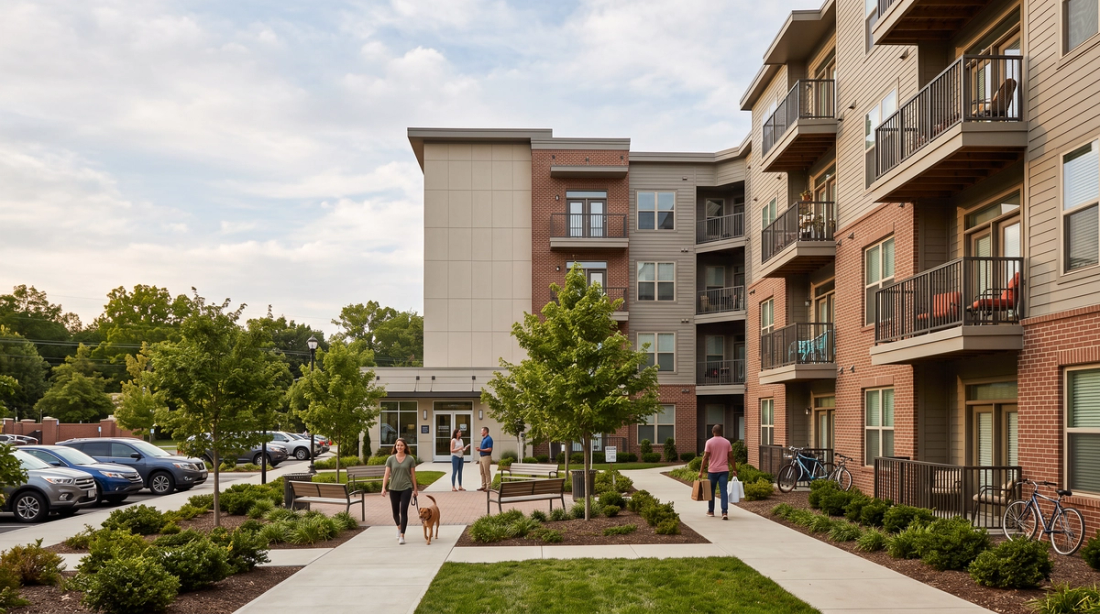
Seattle Apartment Vacancy Falls as New Deliveries Slow
Seattle apartment vacancy fell to 6.6% in the third quarter as occupied-unit growth outpaced completions. Asking rents rose annually but slipped from the second quarter.


Leasing & RevenueAnalysis
The highest signed rent is not always the best lease. Here’s how apartment operators can weigh vacancy, concessions, lease terms and renewals to protect net revenue.
So what: Leasing teams need more than rent-growth targets. This framework helps operators choose offers that reduce vacancy, control concessions and improve total revenue.

A higher signed rent is not always a higher-revenue lease.
For leasing teams, the question is no longer only, “What is the highest rent we can achieve?”
It is, “Which lease creates the best total revenue outcome for this apartment, at this property, right now?”
That requires balancing rate integrity against a harder operational reality: an apartment that stays vacant for another day loses potential revenue that cannot be recovered later.
That distinction matters as apartment operators navigate muted effective-rent growth, new supply in several regions and continued pressure to preserve occupancy. CBRE expects operators to prioritize occupancy over aggressive new-lease rent growth through much of 2026, using concessions for new residents while benefiting from historically high renewal activity.
Option 1: Hold at asking rent
Option 2: Make a market-responsive offer
The first option delivers $45 more in monthly rent. On paper, that looks like a better lease.
But a 14-day vacancy at the $1,850 asking rate represents about $863 in lost potential rent:
$1,850 ÷ 30 × 14 = $863
At a $45 monthly premium, it would take more than 19 months to recover that lost potential rent—before accounting for utility expense, additional marketing, staff time or the risk that the unit ultimately needs a concession to lease.
The calculation does not mean a team should reduce rent every time a prospect hesitates. It means price should be evaluated alongside vacancy cost, demand, available inventory and the likely outcome of waiting.
Asking Rent Is Not Revenue
Asking rent is an important signal. It communicates a property’s market position, supports pricing consistency and can influence future renewal and valuation discussions.
But it is still an intention—not a financial outcome.
A practical way to frame the decision is:
Net lease revenue = (effective rent × occupied days) − concessions − vacancy loss − turn costs − leasing costs
The exact calculation will vary by operator, market and accounting practice. The point is to treat every lease as a complete economic decision.
A slightly lower effective rent may produce a stronger result when it prevents a lengthy vacancy, avoids a larger future concession, shortens the leasing cycle or shifts a future expiration into a stronger leasing season.
The operating environment makes that analysis more important. CBRE forecasts that asking-rent growth will remain constrained in many markets in 2026, particularly in the Southeast, South Central and Mountain regions, where economic headwinds and the remaining supply pipeline continue to pressure occupancy and pricing. CBRE
The Metrics Need Context
Asking rent shows intended market position—not conversion or the full economic outcome.
Signed rent reflects the lease rate—but not concessions, vacancy days or the timing of the lease.
Physical occupancy shows how many homes are filled, but not how much it cost to fill them.
Economic occupancy captures collections against potential rent, but may not reveal future turnover exposure.
Net effective rent accounts for concessions, but not vacancy loss and turn expense.
Blended lease growth combines new leases and renewals, but can obscure unit-level availability or conversion problems.
For portfolio and asset-management teams, blended lease growth deserves close attention because it reflects both new leases and renewals. CBRE reports that renewals account for 57% of leasing activity, up from 51% in 2015 and 48% in 2005. The firm expects blended rent growth to remain more resilient than asking-rent growth in markets where renewals carry a larger share of revenue performance. CBRE
For site teams, the more immediate question is simpler: What is the daily cost of leaving this apartment unleased?
A unit listed at $1,800 per month represents roughly $60 in potential rent per day. A 10-day delay means about $600 in lost potential rent before including utilities, make-ready delays, marketing cost and the possibility of a future incentive.
That daily figure should be part of every conversation about whether to hold firm, adjust rent or make a targeted offer.
Five Decisions That Work Together
Pricing is often treated as a revenue-management issue, concessions as a leasing issue, turn time as a maintenance issue and renewals as a resident-retention issue.
In practice, they are all parts of the same revenue system.
The advertised rate should reflect market position and the property’s revenue strategy. But it should also be tested against actual demand.
A floor plan with three ready units, low tour volume and rising days vacant may need a different approach than a unit type with limited availability and strong conversion. Holding a rate that does not produce qualified traffic or applications is not rate integrity. It is a pricing assumption that needs to be tested.
Concessions can be effective when they are specific, measured and tied to a clear leasing objective.
The challenge is avoiding blanket offers that give away revenue on apartments that would have leased with less incentive. A more disciplined concession strategy might account for:
•Unit type and current availability
•Days vacant or days available
•Move-in timing
•Lease term
•Documented competitive offers
•The property’s immediate occupancy objective
The goal is not to eliminate concessions. It is to use them with intent.
CBRE expects operators to continue offering new-resident discounts while working to preserve occupancy during a period of slower rent growth and continued supply absorption. CBRE
Every day between “ready to show” and “lease signed” matters.
An apartment can be competitively priced and still lose revenue because it was not ready on time, photographs were delayed, a prospect inquiry was not answered promptly or a leasing associate could not get pricing approval while the prospect was still engaged.
Speed to lease is therefore more than a customer-service metric. It is a revenue metric.
Property leaders should monitor the time between:
•Notice to available date
•Available date to ready date
•Ready date to first showing
•First inquiry to first response
•Tour to application
•Application to lease execution
Those intervals often identify a larger revenue opportunity than a small adjustment in asking rent.
The longest lease is not automatically the most valuable lease.
Lease terms should help manage a property’s expiration calendar. A 15-month lease may deliver stability today but create an expiration during a weak leasing period next year. A different term may return the apartment to market during a season with stronger demand and less competing supply.
The objective is not simply to extend every lease. It is to avoid creating a concentration of expirations that forces the property to compete with itself later.
Renewals should be evaluated as retention decisions, not merely rent-increase opportunities.
A resident who leaves creates a series of costs: turnover labor, make-ready materials, vacancy exposure, marketing, staff time and the risk that the replacement lease will require a concession or settle at a lower effective rate.
That does not mean operators should avoid renewal increases. It means the increase should be tested against the real cost of losing the resident.
Camden Property Trust’s second-quarter 2026 results illustrate the competing pressures at work. In its same-property portfolio excluding California, Camden reported 95.7% occupancy, effective new-lease rates down 3.3%, renewal rates up 2.8% and effective blended lease rates down 0.2%. Camden Property Trust
The lesson is not that every operator should pursue the same pricing strategy. It is that new-lease pricing, renewal performance, occupancy and concessions must be interpreted together.
Where Revenue Leaks
A property can preserve a strong asking-rent figure while accumulating vacant days, repeated price changes and eventual concessions. Asking rent should guide strategy, but it should not be mistaken for realized revenue.
Community-wide incentives are easy to market but can be expensive. They may discount homes that did not need help to lease, complicate resident expectations and reduce the team’s ability to learn which offers actually drive conversion.
Volume alone does not show whether leases were signed quickly, with appropriate concessions, at workable terms or with durable revenue in mind. Leasing performance should include conversion, speed, effective rent, concession spend and the quality of occupancy—not simply signed leases.
An apartment does not create revenue until it is ready, presented well and available to lease. Delayed turns, incomplete make-readies, missing photos and unresolved maintenance issues are revenue problems, not only operational problems.
A higher renewal offer that prompts a reliable resident to leave can create a more expensive outcome than a smaller increase that preserves occupancy and avoids a turn.
A 30-Day Reset
Operators do not need a new technology platform to begin making better decisions. They need a more complete weekly conversation.
Create a report that lists every available and upcoming apartment by unit type, ready date, days vacant, asking rent, effective rent, current concession, traffic, tours, applications and projected expiration month.
The purpose is to make aging inventory and bottlenecks visible before they become expensive.
For each unit type, estimate the daily value of a vacant apartment:
Daily vacancy cost = monthly market rent ÷ 30
Use that calculation when deciding whether to maintain price, make an offer or revise a concession.
Define when site teams can use incentives and what approval is required as a unit ages.
For example, a community may allow a modest offer after a unit has been ready for a set number of days, require regional approval for larger incentives or use lease-term incentives to address an upcoming expiration imbalance.
The key is to connect each concession to a stated objective.
Each month, select a sample of lost prospects and residents who gave notice. Ask:
•What was the final offer?
•What did the renter choose instead?
•How long did the apartment remain vacant?
•What concession was eventually required?
•What effective rent did the replacement lease achieve?
•Did the lease term improve or worsen the expiration calendar?
This turns lost leases into operating intelligence rather than simple losses.
The Revenue Question That Matters
Rate integrity still matters. So do pricing discipline, market positioning and long-term asset value.
But those goals should not obscure the fact that every available apartment is a perishable revenue opportunity. Once a unit sits empty for another day, that day’s potential rent is gone for good.
The most effective leasing organizations will not focus only on the highest rent they can place on a lease agreement.
They will focus on the best economic decision they can make before another day of revenue disappears.
Seattle apartment vacancy fell to 6.6% in the third quarter as occupied-unit growth outpaced completions. Asking rents rose annually but slipped from the second quarter.
Residents remember slow repairs at renewal time. Property managers need to measure maintenance service as a retention and revenue function, not just a closed-ticket count.
New Apartment List data shows U.S. vacancies slipping from their recent peak as rent declines narrow, signaling that the multifamily supply wave is beginning to be absorbed.