
Golf Amenities in Multifamily: Beyond the Leasing Tour
Golf simulators and putting greens can distinguish multifamily properties. Their lasting value depends on resident use, operating costs and the space they occupy.


A four-property preservation project modernized 341 public-housing apartments in Troy, adding energy upgrades, accessibility improvements, and resident return protections.
So what: The project shows how PHAs can combine tax credits, energy upgrades, and relocation planning to preserve aging homes without permanently displacing residents.
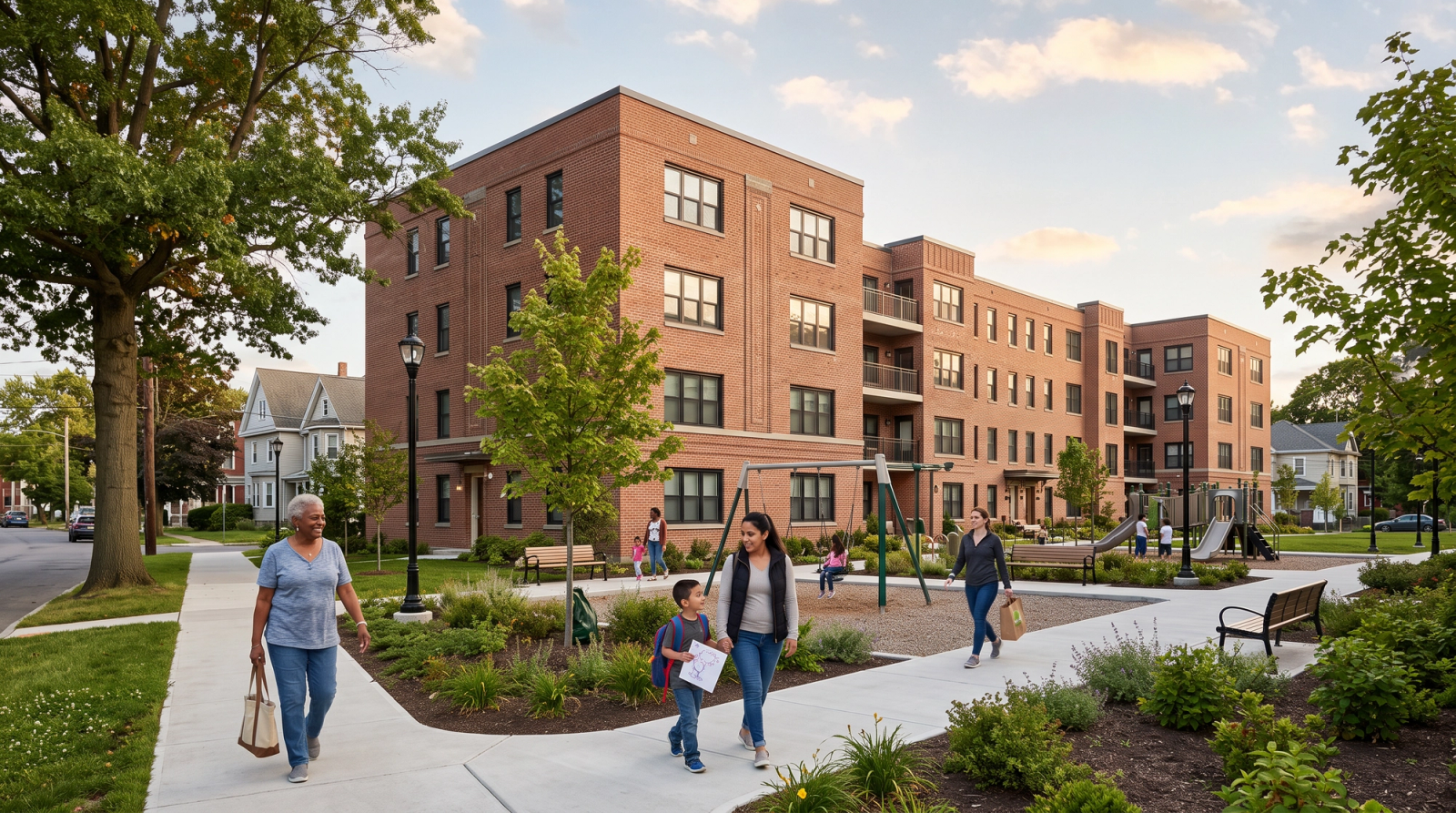
The preservation project modernized four public-housing communities, added energy-efficiency upgrades, and maintained resident return protections.
TROY, N.Y. — The Troy Housing Authority has completed a $152 million rehabilitation of 341 affordable apartments across four public-housing properties, concluding the second phase of a broader effort to modernize and preserve its aging housing portfolio.
The work covered Corliss Park Apartments, Grand Street Apartments, Margaret W. Phelan Apartments, and Catherine M. Sweeney Apartments. The homes will remain affordable to households earning up to 60% of area median income, according to New York State Homes and Community Renewal.
The project is the second phase of the Troy Portfolio Preservation Bundle, a public-housing recapitalization initiative involving the Troy Housing Authority and MDG Real Estate Partners. The earlier phase rehabilitated 391 apartments at Griswold Heights, while related work also included the 141-unit Taylor Apartments. In total, the wider effort is intended to improve more than 1,000 affordable homes in Troy.
Renovations at the four most recently completed properties included updated kitchens and bathrooms, new flooring, lighting improvements, exterior upgrades, landscaping, and three new playgrounds. The project also preserved historic façades at Corliss Park and Grand Street while fully renovating exteriors at Margaret W. Phelan and Catherine M. Sweeney.
The financing package combined multiple public and private sources, including more than $59 million in federal Low-Income Housing Tax Credit equity, $48 million in subsidy, approximately $20 million in federal and state historic-tax-credit equity, and $1 million through New York’s Clean Energy Initiative.
The rehabilitation incorporated energy-efficiency measures intended to reduce building energy use by more than 20%. Upgrades included energy-efficient appliances, LED lighting, high-efficiency domestic hot-water systems, low-flow plumbing fixtures, and all-electric heat pumps for heating and cooling.
The project also included accessibility improvements, with 20 apartments designed for residents with mobility disabilities and eight apartments designed for residents with sensory disabilities.
During construction, residents were moved into vacant Troy Housing Authority apartments and retained the right to return to their original homes without rent increases. That approach reflects a central challenge in occupied affordable-housing rehabilitation: completing significant capital work while minimizing disruption and maintaining resident protections.
For public-housing authorities, the Troy project illustrates how preservation transactions can extend the useful life of older assets while addressing deferred maintenance, resident comfort, accessibility, and operating efficiency. The long-term test will be whether the authority can sustain the upgraded portfolio through preventive maintenance, effective management of new building systems, and continued investment in property operations.
Golf simulators and putting greens can distinguish multifamily properties. Their lasting value depends on resident use, operating costs and the space they occupy.
At some apartment buildings, residents can borrow household items when they need them, then give the space back to their homes.
At Denizen Bushwick and Haus25, hydroponic farms offer city renters more than a view of greenery: an opportunity to grow produce or take home a harvest.